


Difference between software architecture and software design
January 24, 2021
5 min
Design pattern, Factory Design Pattern in Python, Creational Design Pattern, Example of Factory Design pattern in Python
Design patterns define tried and tested solutions to various recurring problems in software development. Broadly, design patterns are divided into creational patterns, structural patterns, and behavioral patterns.
In a nutshell, Design pattern provides two major benefits: a) They provide a mechanism to solve issues related to software development using a proven solution, b) the solution facilitates the development of highly cohesive modules with minimal coupling. Here are the list of other benefits of design patterns in general:
The Factory Method Design Pattern is a type of creational design pattern. And in this article, we will discuss in detail about it.
Consider a use case from a software that I have been developing for Internet-Delivered Psychological System (IDPT). Generally, consider it as a typical CMS system where, an object Task can be audio, video or text. Check the UML diagram given below:
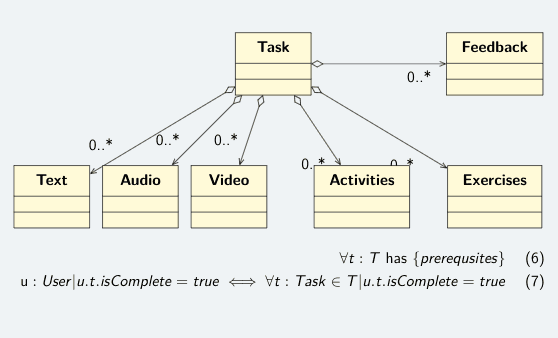
We start by creating abstract class to represent generic task. Look at the implementation code given below.
# Import Abstract Base Class
import abc

class Task(metaclass=abc.ABCMeta):
  @abc.abstractmethod
  def total_duration(self):
    pass

  @abc.abstractmethod
  def required_duration(self):
    pass

  @abc.abstractmethod
  def display(self):
    pass
This is the base class for all our tasks. When we say abstract class, we define the placeholder attributes and properties that should be implemented by child classes.
Now, let us go ahead and install some of the dependencies that we shall be using during the class implementation. I am going to use faker, lorem-text and readtime. Let us install them right away.
!pip install faker
from faker import Faker
fake = Faker()
Also, install lorem-text and readtime.
!pip install lorem-text
!pip install readtime
Now, let us go ahead and create several concrete, more specific task classes. Note, as shown in the UML diagram above, TEXT, AUDIO, VIDEO are the types of TASK.
import random
import readtime

class Text(Task):
  def __init__(self, id, htmlText):
    self.id = id
    self.htmlText = htmlText

  def total_duration(self):
    return readtime.of_text(self.htmlText)

  def required_duration(self):
    return self.total_duration()

  def display(self):
    return self.htmlText


class Audio(Task):
  def __init__(self, id, link):
    self.id = id
    self.link = link

  def total_duration(self):
    return '2 min'

  def required_duration(self):
    return '2 min'

  def display(self):
    return self.link

class Video(Task):
  def __init__(self, id, link):
    self.id = id
    self.link = link

  def total_duration(self):
    return '4 min'

  def required_duration(self):
    return '4 min'

  def display(self):
    return self.link
So far, we have created an abstract class Task and extended it to three other classes namely Text, Audio and Video. In order to create the different sub-classes, client will have to know the names and details of the shapes and separately perform the creation. This is where the Factory method comes into play.
The factory method design pattern will help us to abstract the available shapes from the client. It allows us to centralize and encapsulate the object creation.
Now, let us create a factory named, TaskFactory that will help us create the specific Task classes based on the client input.
from lorem_text import lorem

class TaskFactory:
  def create_task(self, name):

    if name == 'text':
      id = random.randint(1, 1000)
      htmlText = lorem.paragraph()
      return Text(id, htmlText)
    elif name == 'audio':
      id = random.randint(1, 1000)
      link = fake.hostname()+'/audio/listen.mp3'
      return Audio(id, link)
    elif name == 'video':
      id = random.randint(1, 1000)
      link = fake.hostname()+'/video/video.mp4'
      return Video(id, link)
This is the interface for creation. We do not call the abstract class, instead we call the factory and ask it to create a Task for us. For example, if we want to create a Video task, then we can initiate the Factory as given below:
factory = TaskFactory()
xx = factory.create_task('video')
xx.display()
The output of the above code is given below. Please note, since, I have used the faker to generate some data, the output you might get can be different from the one I have below:
desktop-19.hicks-clark.net/video/video.mp4
In conclusion, the Factory Method Design Pattern allows us to create objects without specifying the exact class required to create the particular object. This allows us to decouple our code and enhances its reusability.
It is important to note that, just like any other design pattern, it is only suitable for specific situations and not every development scenario. An assessment of the situation at hand is crucial before deciding to implement the Factory Method Design Pattern to reap the benefits of the pattern.

Quick Links
Books Authored by Me